I Can See It From Here
Mini Mart City Park
September 5th-28th, 2026
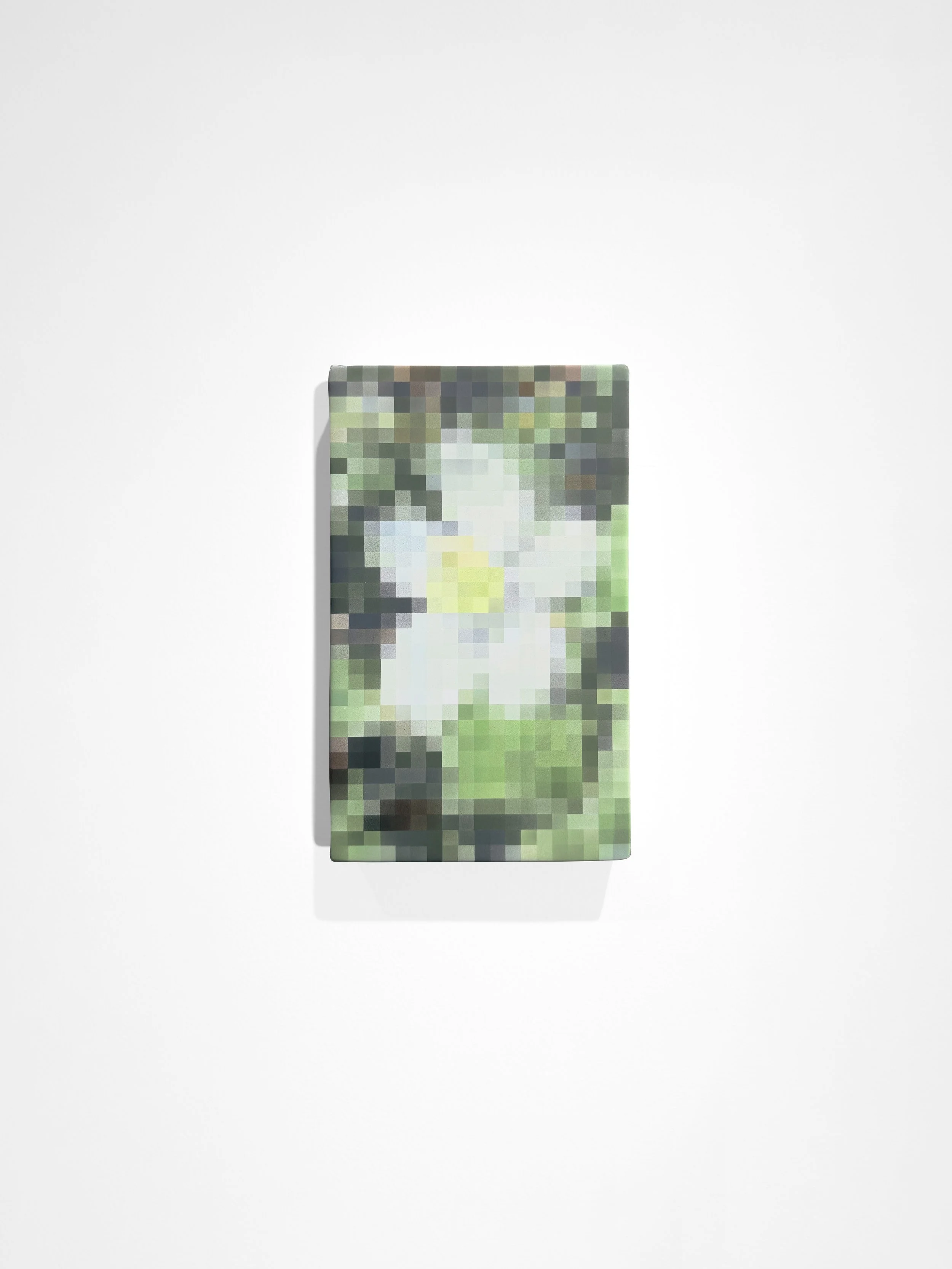
I Can See It From Here presents a new body of paintings by Hank Reavis, completed between 2024 and 2026 and exhibited at Mini Mart City Park, a reclaimed gas station in Seattle’s Georgetown neighborhood. The title refers to the distance between an experience and its later recollection, and the inevitable transformation that occurs between the two.
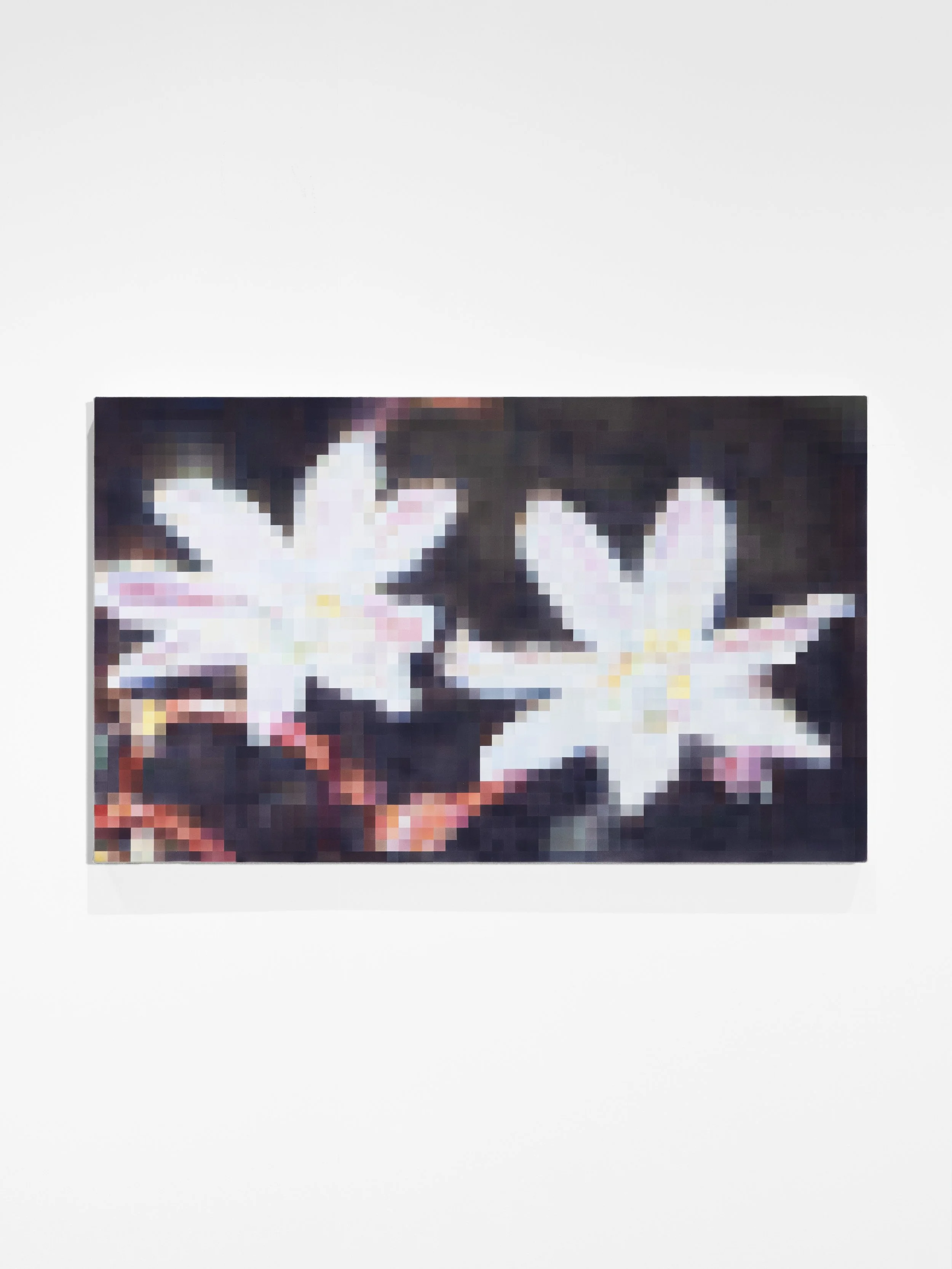
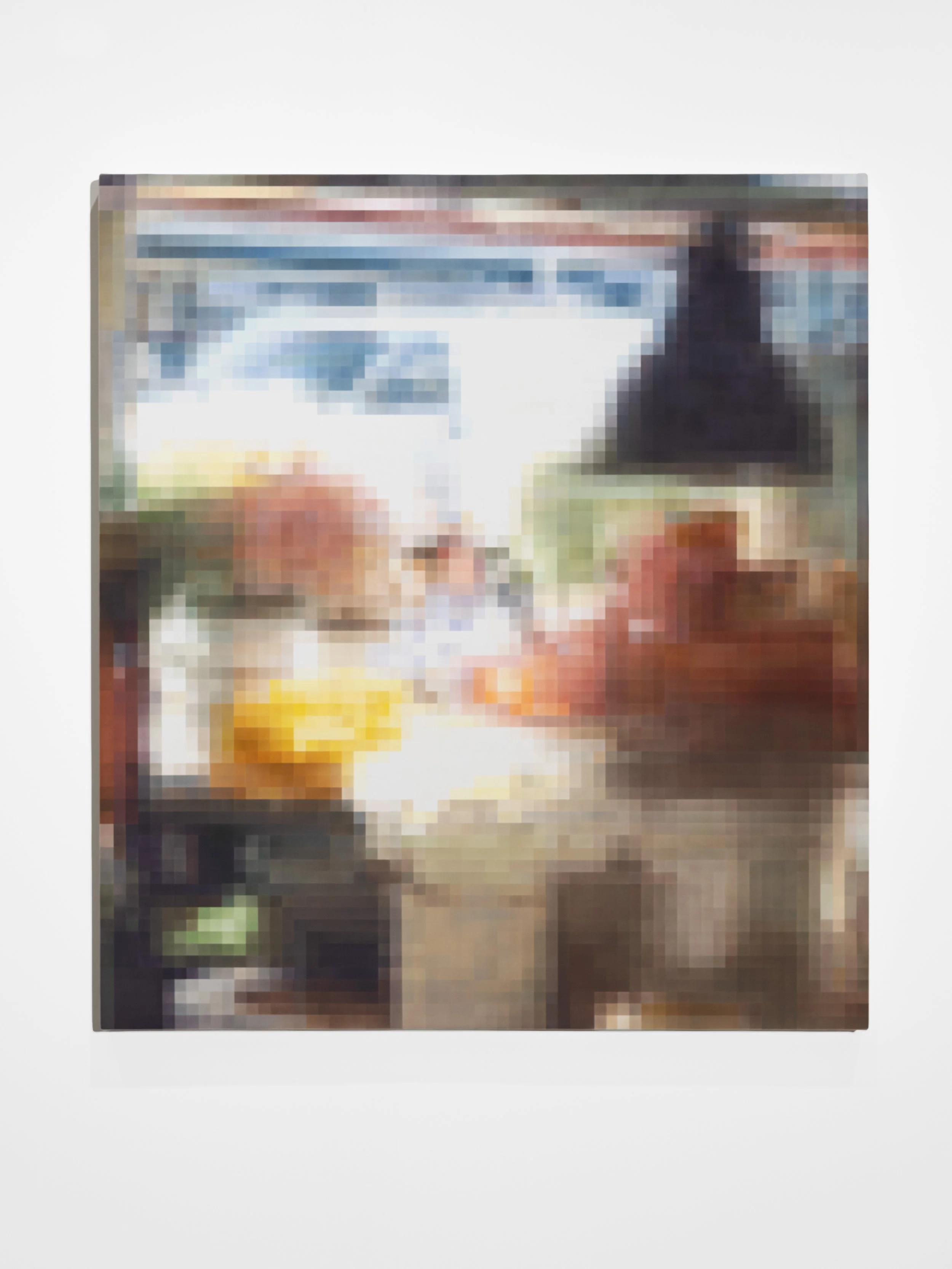
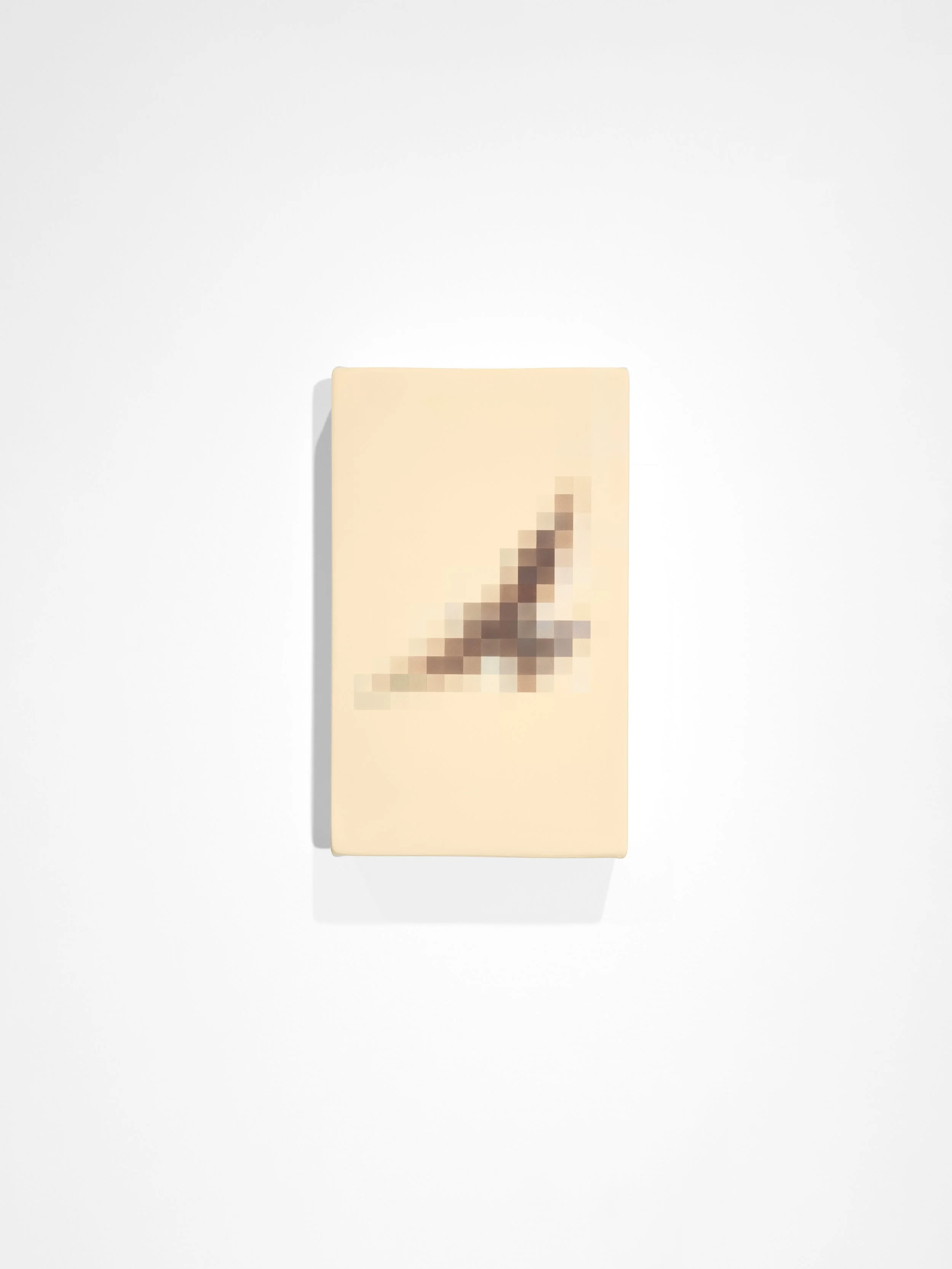
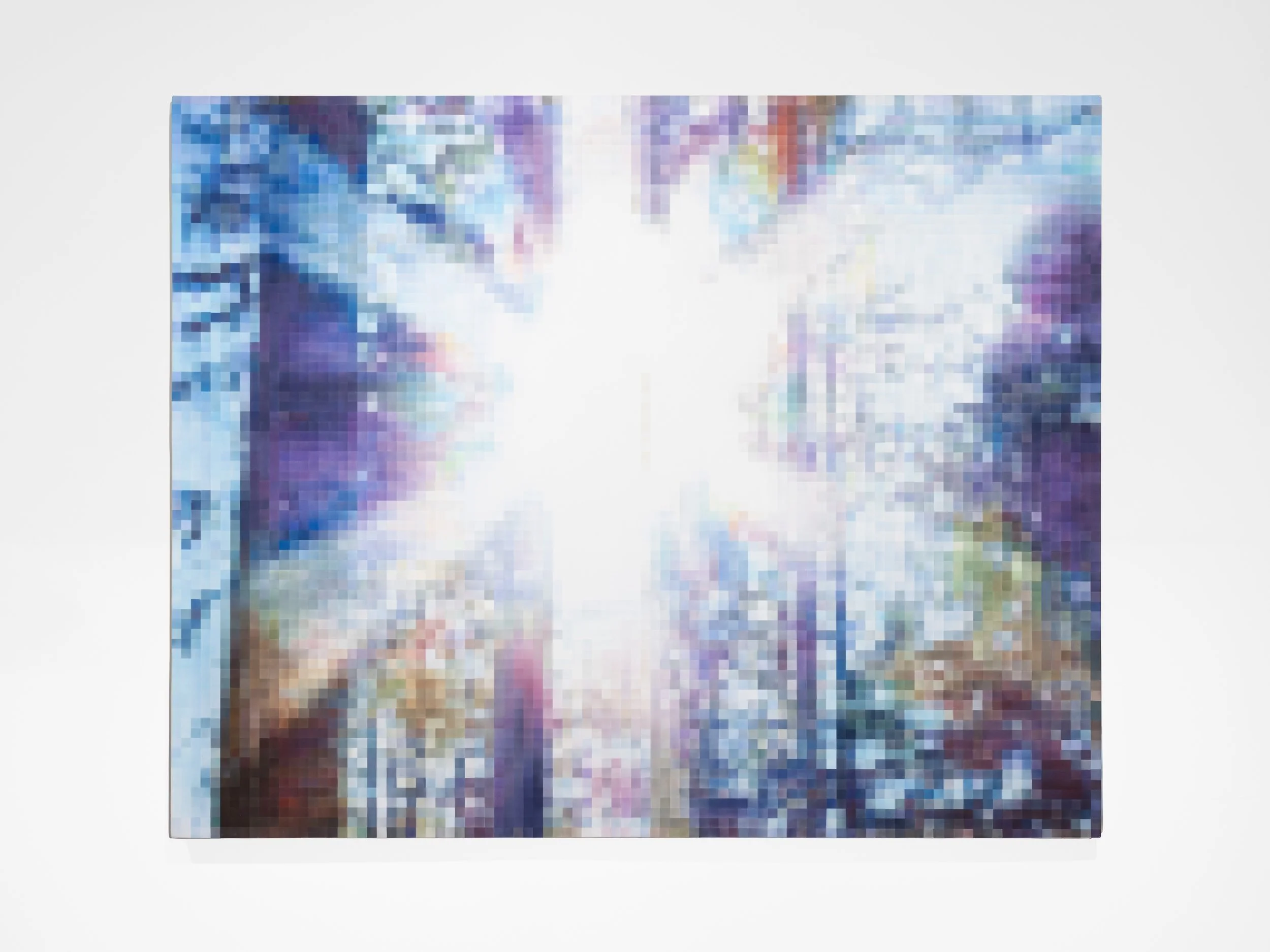
Reavis’ pixelated works consist in their framing and filtering, the screen-like interface of fragmentation conveying meaning perhaps more than the vague source imagery that underlies them. For those raised with the image after film, subtle qualities like the definition of megapixels or the sensitivity of light sensors can point us intuitively to remembering the generation of camera technology that captured them, and by extension the scenes and feelings of our lives at that time. In that way, the field of pixels becomes a subject of the painting itself, foregrounding its texture, depth, resolution, and contrast. The underlying subject cedes primacy, even becoming partly arbitrary.
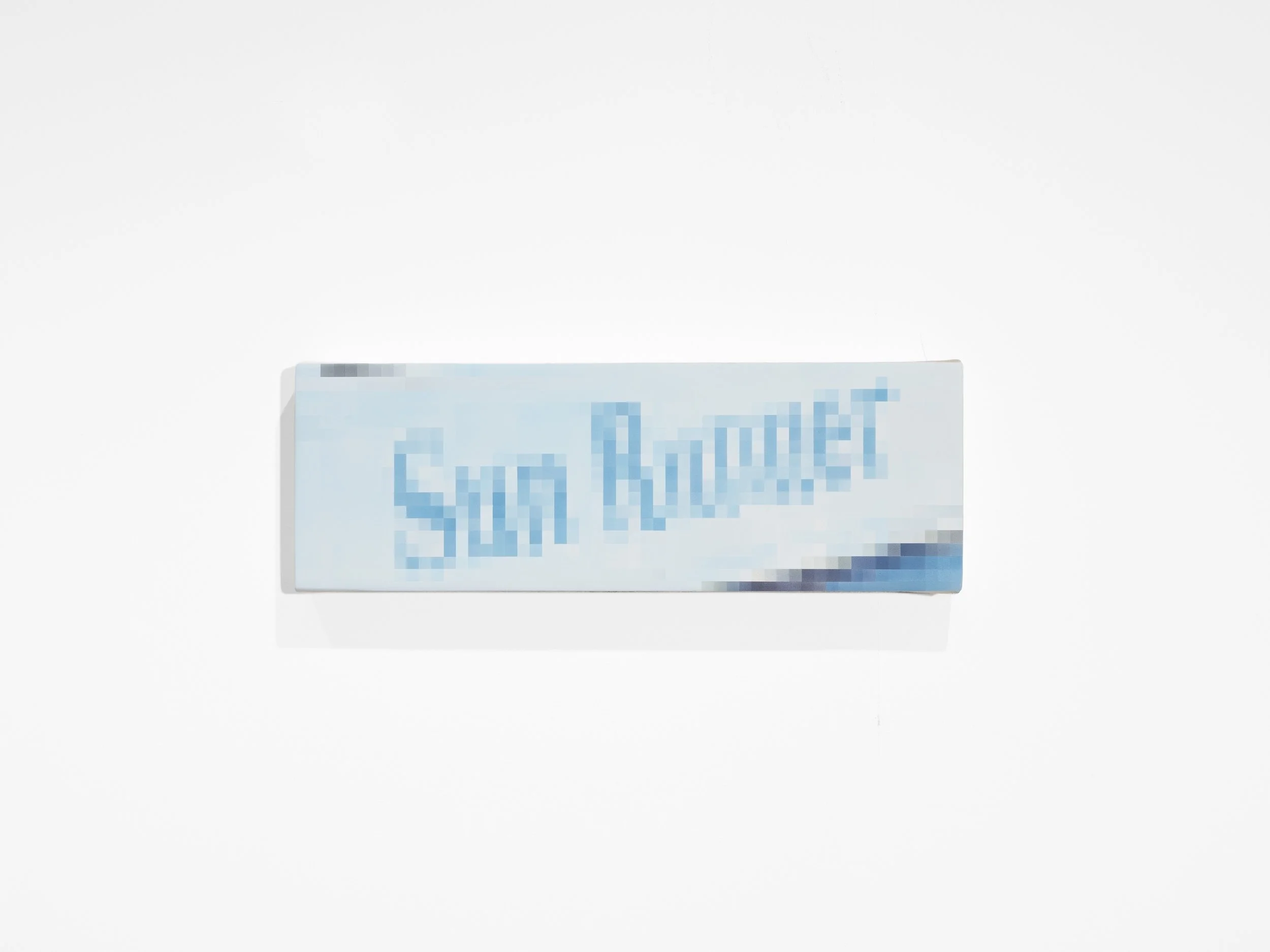
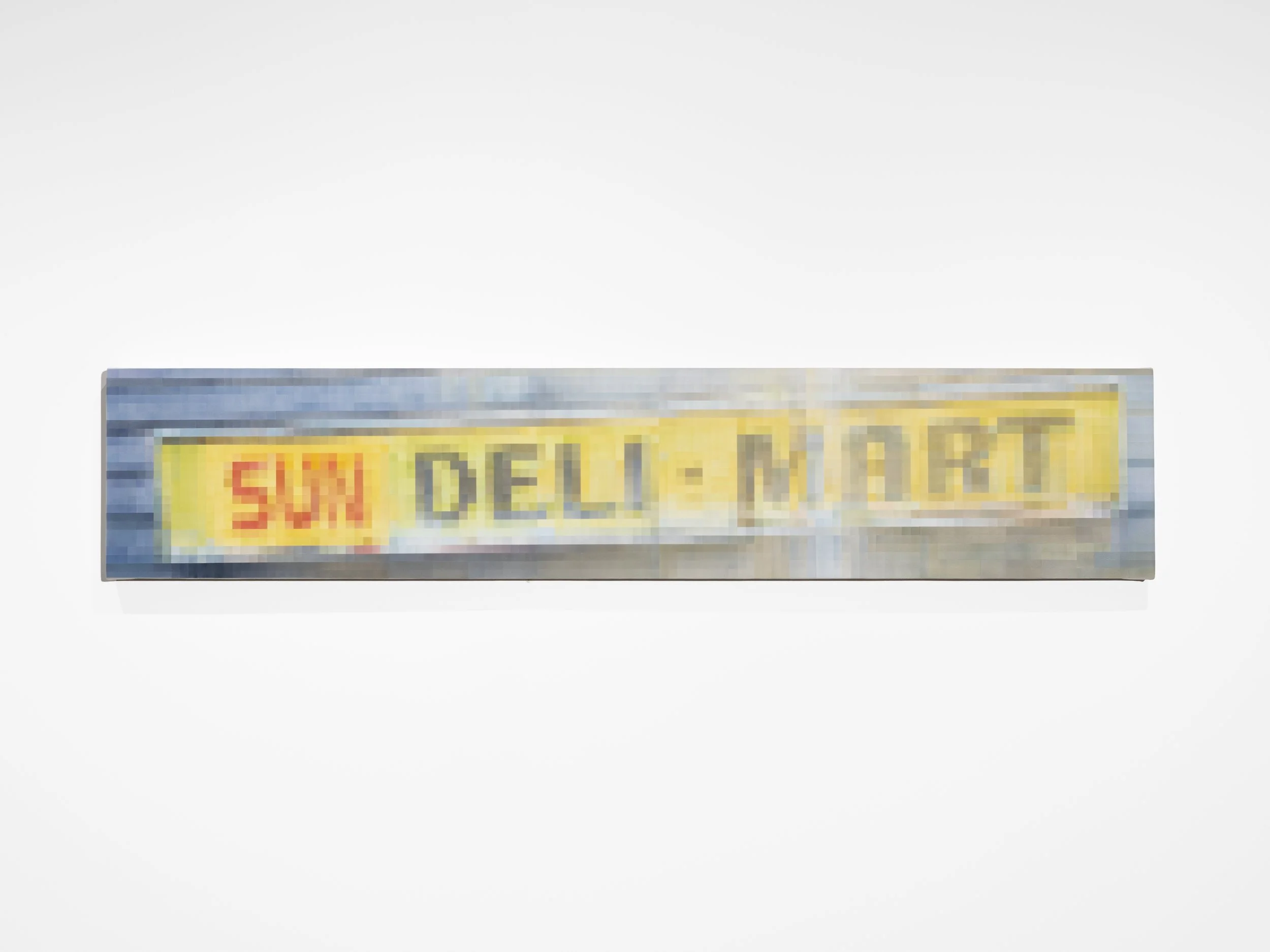
The compositions themselves are cropped tight, lacking outer scenographic context. The images act like mnemonics: the objects within don’t contain the narrative themselves, only hints of it, but might spark a Proustian connection to memory. This method of indirect portrayal is conceived to distance the images from their sources through steps of removal, a difficulty in apprehension that is mirrored in the degraded resolution Reavis paints with. The unconventional canvas dimensions of Sun Deli Mart (2026), for instance, indicate how dramatically cropped the sign is, such that it exists more as an abbreviated vignette than a complete scene. For the artist, this landmark is an adequate symbolic nudge to invoke memories from over a decade past of the drive to a close friend’s house in South Seattle: the old sign doesn’t represent the destination or person that are the memory’s main subjects, but rather is a passing detail encountered along the way. The figures contained in these paintings (a bird, an old truck) are like secondary keys found while searching, frustratingly, for something more significant: incidental details that instead unlock a flood of moments, scenes, and associations surrounding the memory itself. They are incomplete but adequate referents, a finicky synecdoche where the logic that extrapolates small fragments out to an intended whole follows no linguistic or philosophical rule, but rather the unpredictable, mysterious mechanisms of personal memory consolidation. What I like about these paintings is that, in what they choose to isolate, they pay homage to the intimately human black box that is how we enshrine important times in our often inconsistent recollection system.
Reavis has been influenced in his recent work by the Northwest Mystic painters Morris Graves, Mark Tobey, and Kenneth Callahan, especially in the way that they studied nature by transposing the human spirit outwards onto the natural landscape of the area. This was carried out in the opposite expressive impulse to their ABEX peers in New York, or their Surrealist predecessors in Europe: rather than paraphrasing the inner life of the soul and mind by turning within, the Northwest Mystics projected it outward through symbols found in the nature around them. Other contemporary Northwest painters like Jean Nagai have also interpreted their home landscape in a pointillist language (because, indeed, Reavis’ pixels are a form of hard-edged pointillism). Whereas Nagai’s pointillism is more in line with the original Post-Impressionist visual ideas that took on new understandings of how light and color are mediated by the science of optics, highlighting the illusory nature of the image, Reavis’ images are instead translated through the non-biological filter of the computer. Any claim that this form of pixelation is less human, or more objective, is itself a misconception, as Reavis must painstakingly attempt, pixel by pixel, and always at the mercy of the accuracy of his own perception, to recreate and paint the hues of each cell by hand. In that way, Reavis’ pixel paintings share the meditative process of visual accretion seen in Nagai’s pointillist works. Other types of pixelation, or, rather, painting dealing with resolution, should be acknowledged here too, such as Gerhard Richter’s blur paintings of the 1980s. Though we might think of the "blur" as the opposite painterly gesture to the pixelation seen here, the two choices share an implication of the incoherence of memory. Fundamentally, Reavis’ choice to work within pointillism in a digital dialect isn’t “about” modern technology as a processing force, mediator, or even a tool. Rather, it engages a familiar, contemporary visual language to suggest the instability of recollection, but also how much we are able to reconstruct from very little.
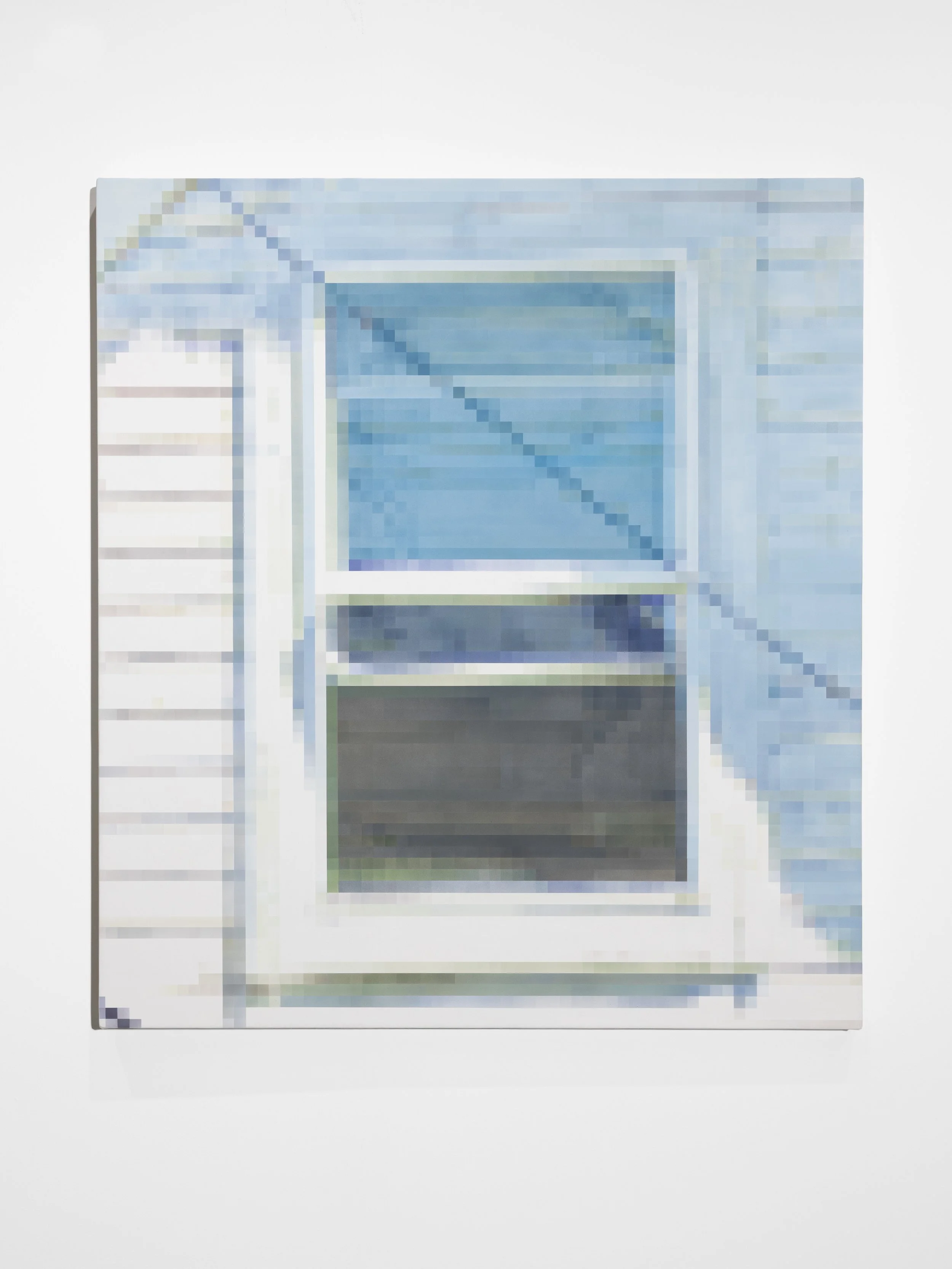
In choosing his source images, Reavis inserts a large part of his own subjectivity, often drawing from historical views accessed through Google Street View’s archive. Yet this specificity is not intended to close the images off to others; rather, it creates points of recognition through which viewers might locate their own associations. Reavis is ultimately concerned with how these accumulated experiences form our sense of who we are, and how often what feels deeply personal is in fact shared. This relationship between memory and identity carries particular weight for Reavis, whose father died of Alzheimer’s, making the frailty of memory and its impact on our relationships a subject of lifelong importance. Hoquiam Window (2026) is one such example of an image chosen for the way its architectural specificities, natural lighting conditions, and obscured interior hold the possibility of faintly pointing at a remembered moment or view of some significant place in the past, but without enough to complete it. In Reavis’ paintings, memory must always contain within it the impossibility of total recovery, and therefore, an acceptance of loss. As this method is repeated, pixel after pixel, each rendering incurs its own degradation and alteration, mirroring the way memory is inevitably reshaped each time it is accessed.
Exhibition text by Bergen Hendrickson
Flyer artwork by Dylan Hayes